Where is Andy?

Home  |  Photos  |  Maps  |  Guest Book  |  About  |  Links


29.03.07

Hmong under threat

Posted in Laos, Travel, Vietnam at 2:04 pm by Andy

I’m really not in a writing mood so you’ll have to wait a bit for more America bashing along with my latest experiences in Vietnam. Heading in the direction of Cambodia tomorrow up the Mekong delta.

For the time being, as a follow on from my Secret War post, have a read over this Amnesty International article about Laos.

Thanks to Jordi and Nuria for sending the link over.

28.03.07

Happy Birthday!

Posted in General at 11:41 am by Andy

25.03.07

Photo Gallery Updated

Posted in Travel at 12:24 pm by Andy

A short post for once. I’ve updated the photo gallery with collections from Kanchanaburi, Ayutthaya, Umphang and Chiang Mai. The “Hall of Fame” is also new, a collection of photos of quality people that I’ve met while traveling.

Check them all out in the Photo Gallery

23.03.07

Hanoi

Posted in Travel, Vietnam at 4:26 am by Andy

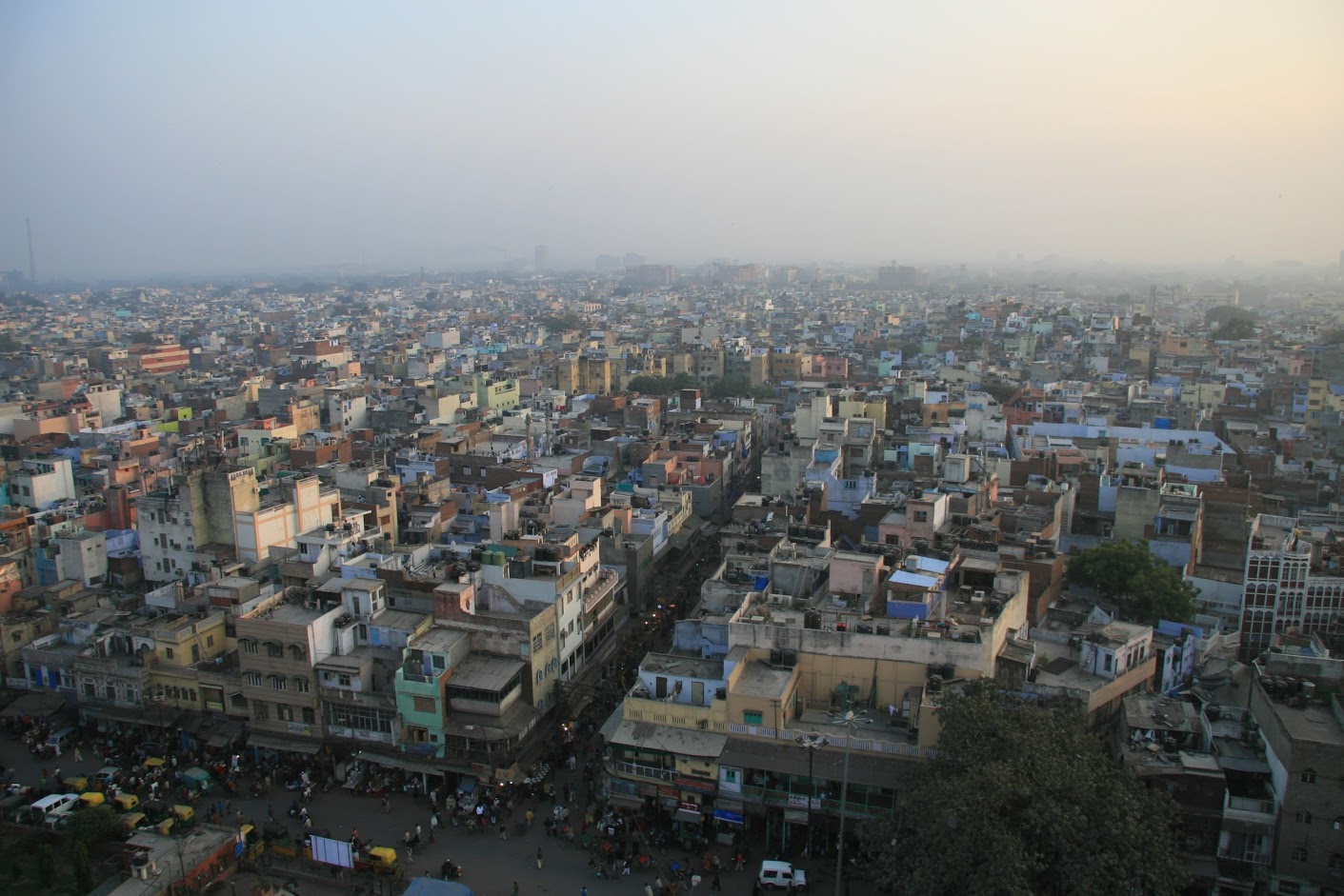
Well, we’re still in Vietnam and as they say, time does heal wounds. Hanoi is crazy. Not Delhi crazy, but crazy none the less. Population is three million and there must be about two million mopeds buzzing around. Most don’t bother paying attention to traffic lights so at cross junctions motorbikes from four directions pile on in, and miraculously after a lot of weaving most come out the other side unscathed. Despite this crossing the road is not a problem. One just walks across as if crossing a stream, and the traffic flows around either side.

Hanoi is quite cool actually. Both the French quarter and old quarter are fascinating places to stroll around, with old colonial buildings and a maze of old trading streets respectively. I was disappointed by the Ho Chi Minh museum though. Full of artifacts and news paper cuttings in French, but no real information. I left knowing as much about “Uncle Ho” when I left as when I went in.

I must admit, arriving in Hanoi I feel tired. Three months on the road is a long time. I’ve seen so much since I left Europe, yet I never have any time to take in what I’m seeing. I’m tired of haggling for everything. Tired of being pressured into things. And tired most of all from the journey from the border crossing to Hanoi. Don’t get me wrong, many many great experiences, and I wouldn’t change it but I just have no home to turn to. I can’t curl up on my sofa and watch a film. Due to our budget most accommodation is very basic and not overly comfortable (often with shared bathrooms). In fact I think Paul Theroux summed it up quite well when he said “Traveling isn’t glamorous until you get back home”.

For this reason we splashed out a bit in Hanoi. We’ve stayed in a nicer hotel than normal with luxuries of a TV, fridge and a bath. We’ve also been to some nicer restaurants sampling some Tapas and Aussie grill bar goodness. Apart from that I’ve not done much really. Just recuperating and catching up. I’ve been well and truly rinsing the free Internet connection at the hotel, hence the multiple successive posts (don’t let the dates fool you). In the background I’ve also been able to upload hundreds of photos so some more galleries should appear soon.

Oh, and Alan, Raul and Robbie. It would appear the Vietnamese government don’t want their people reading about your opinions. All blogspot sites are inaccessible from here.

19.03.07

Welcome to Vietnam

Posted in Travel, Vietnam at 2:16 pm by Andy

“All the peoples on earth are equal”

Ho Chi Minh

Unless of course you are a western tourist in Vietnam. Never before have I entered a country and wanted to leave within the first 24 hours.

Many of the travellers I’ve met that have been to Vietnam were negative about their experiences. Of course there are a few who loved it, but I’d heard that the people are very aggressive and not friendly. This was reinforced further when Jordi said “I’ll never go back there”. Still, you can’t judge for yourself until you try it.

Our last day in Laos didn’t start so well. The bus to the border doesn’t run on Sundays. No real problem. We just hitched instead. After 15 minutes of waiting we were picked up by a pick up that was going to the border. Wind blowing through our hair we were happy that we were on our way. That was until we reached the border and the driver wanted considerably more that the cost of a bus trip.

We crossed the border into Vietnam with little trouble although the Vietnam immigration officials scrutinised our passports, paying particular attention to our recent visit to India. At the border town of Nameo we had lunch and then tried to find out how to move on. We were informed that the only buses left from Quan Son, some 55km up the road. The locals were more than happy to help, offering to take us to Quan Son on motorbike for $10 each.

Now $10 might not sound like much, but over here it is. The average wage in rural Vietnam is $20 a month. The locals, however, were not open to bargaining. They would rather have nothing in place of anything less than $10.

You might wonder why I’m making a fuss over $20, however the only reason we are able to travel so long is because Asia is cheap. We are getting by on less than 20 pounds a day. But the problem was bigger than that. In extreme short sightedness we only had $20 in local currency (some 400,000 dong) on us (Thai Baht is not much use here). That left us with the challenge, to reach Hanoi, some 350km away, with only $20. A true Tom style adventure, and given what we had been quoted our full allowance for the first 50km things didn’t look good.

We gave up on the locals (No one; truck, minibus or motorbike would take us for less than $20) and started walking, fully loaded with our luggage. I’m travelling quite light compared to some, but including all the camera stuff my bags come to about 18kg. Quite a lot when facing a 55km hike.

We covered 10km in two and a half hours. We’d hoped that the locals in villages further away from the border might be more sympathetic to our plight. Evidently not, as motorbikes went up to $15 per person.

As darkness started closing in, we had some good luck and we were picked up by some loggers in a battered old truck. We traveled the remaining 45km perched on top of some logs in the back, stopping en route to collect more logs and drink some rice wine with the labourers. These are the experiences that make independent travel so special. We also spotted as it passed us in the other direction that there is a local bus service to Nameo. The locals had lied to try and get our money.

Travelling with the loggers Sharing rice wine with the loggers

These legendary chaps dropped us in Quan Son outside a guesthouse and restaurant and didn’t ask a penny for their trouble. Back to reality and naturally we were overcharged for dinner and quoted city prices for accommodation. I wandered of to look for an alternative place to stay and was offered to be put up for free by one of the locals who was eating with several of his friends. Once again I was happy to believe that not all Vietnamese were as we’d heard. Only later did I find out that this guy was a bus driver. Not a good sign for the following morning.

So after our “free accommodation” in this guy’s house, he wanted $50 to take us to Hanoi. Despite the fact that we didn’t have half that much on us, this was more than it costs to do the 1700km journey between Hanoi and Ho Chi Minh City. Once again, this chap was not open to negotiation, forcefully telling us that it was $50 or they go without us. They went without us.

Despite the fact that these are government run buses, all of that $50 minus the correct fair goes into the pocket of the driver and his ticket collector. What I found incredible was that they would rather have nothing than less than their ridiculous asking price. Furthermore, one has to ask, how does the price get that high? Clearly travellers have been paying that, otherwise they would never ask for so much in the first place.

We then tried bargaining with the another bus that went half dstance. Although we could afford the $20 he wanted, this would then leave us stranded 150km from Hanoi rather than the current 300km. As that bus also left without us we sat down at the side of the road in despair, all the while with locals coming up to us offering “motorbike, motorbike”, for anything between $10 and $50 to go practically nowhere.

At this point, stranded in Quan Son, I was seriously considering crossing back into Laos. Only the immense remoteness of the north east of Laos and the $30 visa cost put me off. That and the admission of defeat.

Studying our guide and map we were considering the best way to make our way out of this damn country and into Cambodia as fast as possible. My thoughts went to how quickly I could leave thus preventing any more of my money going to any more of these people.

The only people to stop to “help” just wanted dollars. All the others just stood at a distance and laughed at us. We ended up making a scene with both of us taking it in turns to have temper tantrums. I exploded giving an Oscar deserving mental patient act after another bus driver stopped asking for $20 dollars to take us back to the Laos border.

We’d given up hope wondering what on earth we were going to do when a young girl came up to us on her motorbike and said that we should wait where we were (I did wonder if she too was having a dig) as she might be able to help. Thirty minutes later her English teacher turned up and asked if he could help us. After explaining our predicament he took us back to his school, introduced us to his fellow teachers, talked about his life in Vietnam (he earns $20 a month as a teacher) and to top it of he fed us royally.


With my faith in mankind restored he explained how the bus ticket to Hanoi costs $5 and that he would call the afternoon bus driver and have him pick us up. It was all looking good until the bus driver turned up, more aggressive than those before, and told the teacher that we were foreigners and therefore we had to pay $50. The teacher explained that we didn’t have that much. He dropped to $40 but wouldn’t go any lower.

We stormed off in a fit of bad temper and worse language, only to see the bus coming along to pass us on its way to Hanoi. Espe in a total rage stopped the bus Tiananmen Square style, forced the door open, pushed the conductor out of her way and took a seat. After a big confrontation that from the look in the conductors eyes seemed as though it could turn violent at any moment, we gave him all of our money and he allowed us to stay onboard.

Eight hours later we arrived in Hanoi. Not before we’d had further confrontations with this guy as he continued to cram as many people in the bus as possible. Along with the vomiting women next to me, I had someone sitting on each foot.
Upon arrival in Hanoi we still had to cover the 6km to the center, but thankfully a friendly Madrileña took pity on us the and covered the 15 pence for the local bus tickets. Finally at 10pm we found ourselves in a comfortable hostel room falling asleep within seconds (only to be woken at 2am by some noisy Americans - Jonathan was right, the title of my current book “The Quiet American” is an oxymoron).

It took us a day longer than it should but we managed to get by, the pair of us, on $20. So, now that we’ve made it to Hanoi, we’ve just got to find the quickest way out.

We’ve been laughing about it afterwards and now, especially having put it down in words, it doesn’t seem like such a big deal but at the time it was certainly an ordeal for us both. It was a true test of patients that pushed Espe and I over the limit. It also clear to see that Espe loses her temper in a very similar way that I do, and that goes a long way to explain why she tolerates mine.

Now I’m not so naive as to think that everyone on this planet is friendly and willing to help, but crossing from Lao (the country with the most friendly people I’ve ever met) into Vietnam, the difference was striking. So many people out to rob us blind, so few willing to help. Clearly socialism works here. I have to ask though, is this aggressive attitude a result of the Indochina wars, or is just that the reason both France and America were defeated?

17.03.07

The Secret War

Posted in Laos, Travel at 9:07 am by Andy

Everyone has heard about the Vietnam war, but what do you know about the secret war waged by America in Laos?

The 1954 Geneva Convention established Laos as neutral. This was recognised at the time by the USA, yet in 1955, the CIA created a special programs to replace French support of the Royal Laos Army against the communist Pathet Lao. The US kept their hands clean using CIA trained local Hmong tribesmen fighting against the Pathet Lao. This escalated and with the start of the Second Indochina war (The American Vietnam war ) America took the opportunity to run bombing raids on Laos under the shadow of what was happening in Vietnam.

The bombing raids were targeted against the Ho Chi Minh trail which supplied the Viet Cong in South Vietnam and against the Pathet Lao headquarters up at Viang Xay. Aid packages, food and weapons were dropped to the royalists and with hundreds of thousands of bombing sorties run, per population, Laos is the most heavily bombed country in history. Take into account the area of Laos bombed and you are looking at over 3 tonnes of bombs dropped per person.

As I’m not a writer, have a read over the Wikipedia’s version of the aftermath of the war.

After the American withdrawal from Vietnam (1975) the war was openly considered a geopolitical disaster. The botched operation in Laos was barely mentioned, as people attempted to keep Vietnam in the past. With the citizens’ help, the American troops were able to come home from “Nam”. The 30,000-plus Hmong who assisted the Americans were not so lucky. Considered a group of “traitors” by their government as well as the Communist Viet Cong, the former Hmong soldiers and their descendants began being exterminated. They fled into the mountains as many of them were hunted down and killed. Reports of the Hmong people being mutilated, raped, and tortured continue as recently as February 2007. The international community has done little to nothing to assist the families of those who helped the Americans during the Vietnam War.

Wikipedia - The Secret War

Over thirty years after the conflict unexploded Bombs remain a huge problem in Laos. There are many land mines but the biggest problem are the countless “bombies” that litter the country. Bombies are the small bombs that make up a cluster bomb. I’d always wondered why there was such a fuss made over cluster bombs. Why are they considered so bad and why is the Geneva Convention so concerned with banning them?

Having spent a day in Phonsavan I can now say why. Cluster bombs are anti personnel weapons. They are design to kill many troops in one go. A single B52 bomber could carry thirty cluster bombs, each bomb over a metre in length. At a predetermined height the bomb casing splits open releasing over 600 “bombies”. These small tennis ball sized bombs then fall to the ground spinning due to attached fins. Depending on design these bombies, once reaching a certain rpm / total number of revolutions a fuse will trigger, exploding the bombie sending out 300 plus ball bearings at ballistic speeds. A single ball bearing at that speed is more than enough to kill a man. If you can begin to consider the sort of damage a single cluster bomb can do, now consider this. Between 10 and 30% of the bombies fail to explode and lie un-detonated in the ground. These often buried slightly under the surface are left to be found and often triggered indiscriminately by whoever discovers them in years to come. Our tour guide in Viang Xay, for example, uncovered one in his garden back in 2004.

Bomb craters litter the ground in and around the Plain of Jars (zoom right in on the my google maps page near the Phonsavan marker and you can see them. They look like golf sand bunkers). People live in constant threat of discovering unexploded bombs (their biggest fears live with their children - the bombies look like toys and hundreds of children have died and been injured playing with them). Agriculture and social and economic development remain affected to this day due to the unexploded ordnance. Consider the extra work involved in ploughing a field or laying a new road with the risk of unexploded bombs all around.

Both a Laos goverment organisation (UXO Lao) and NGO’s from the UK and Australia are working to help the problem of unexploded ordanance (see MAG, yet these bombs will pose problems for many years to come. Many criticise the lack of American involvement, however they say their offers of charity are turned down. That said there is American involvement in Laos, searching for MIA pilots (over 2000 planes were shot down by Russian supplied anti aircraft guns), in which some describe as part of a big cover up. A secret Military city with an airstrip big enough to serve B52s is still off limits to locals and tourists alike. It is said that many American GIs who landed here were told they’d landed in Thailand and travelled overland to fight in Vietnam. Many of these only ever saw Laos, yet believed that they’d served in Thailand and Vietnam.

What was committed by the United States in Laos is considered by many as a grave war crime. Yet so few people know about it (even US senators of the time claim they had no idea) and no one has ever been held responsible. It even remains very much a taboo subject in Laos itself. Schools gloss over the history and many seem oblivious to the past (accept those who live in constant threat of death by bombie). Cynics say this is because there is US money coming in to the right people in power in Laos to cover this up.

All of the above comes from what I picked up from speaking with people in Phonsavan and Viang Xay, visiting historic sights (such as the Pathet Laos cave headquarters in Viang Xay), a British documentary we saw in our guesthouse in Phonsavan, the history section of my Rough Guide and of course Wikipedia. Believe what you will, but even if only half of it is true, I find what went on here quite sickening. Especially when it essentially comes down to differing political opinions of a few powerful men. What could such indiscriminate bombing ever achieve? What good would anti personnel bombs do against the heavy trucks and armament moving along the Ho Chi Minh Trail? How can the death and suffering of so many peasant locals (during and after the war) possibly be justified by America’s containment policy?

Having got that off my chest, I can explain that in actual fact the main reason we went to Phonsavan in the first place was to see the Plain of Jars. Several historic sites littered with ancient large sandstone jars. Impressive in a Stone Henge kind of way, but as I discovered at school I’m much more of a modern history man (Much to the chagrin of my mother… “That’s not history, that happened while I was growing up”).

Cluster bomb casing fence

The tour we did in Phonsavan was excellent. Opting not to visit three “Jar” sites we instead went to see many of the bomb craters, a local village with many useful items built from cluster bomb casings, took a trek to a waterfall for lunch and finished off at the largest “Jar site” for sunset. This standard tour was transformed by our animated tour guide. Possibly the best guide I’ve ever had. Clearly with a political agenda (his grandfather went crazy in a “re-education camp” after the war in which he was in the employ of the CIA) he filled us in with many details and theories. Lots of food for thought, and the basis of this post. Even at the end of the day he still had the gaze of all of us locked on as he talked about Laos’ past. An extra nice touch was that our transport for the tour was a 1972 CIA jeep.

Tourist minibus

After Phonsavan we moved on to the Pathet Lao Caves in Viang Xay which proved to be even more interesting than I’d imagined from our Rough Guide (helped once again by a good tour guide who’s English was not so good yet who made a concerted effort, dictionary in hand, to answer our constant and complex questions). The caves set in Limestone casts provided natural shelter from the bombs. Each of the Pathet Lao leaders had their own caves from where they worked and there was also a huge communal cave which house the local population. Many of which had to farm at night if they were to survive the aerial onslaught.

Other highlights of my time in North East Laos were the long remote mountain bus rides and meeting so many other travellers. One person who deserves a mention, for among other things his interest and tact in extracting as much information from our guides, was Jonathan. A BBC journalist (sshhhh, don’t tell anyone) taking a sabbatical and travelling around the world. Another one of the inspiring characters I’ve met on this trip.

Want to know more? I do, so I’m looking out for these books:

  • The Ravens: Pilots of the Secret War in Laos - Christopher Robins
  • Shooting at the Moon - Roger Warner
  • Tragedy in Paradise - Charles Weldon

13.03.07

Vang Viang

Posted in Laos, Travel at 10:43 am by Andy

We were relaxing by the river in Vang Viang watching the sun set over the mountains. Espe is currently battling her way through Orwell’s Burmese Days (which is full of words that I’ve never seen before). She stopped to look up the word “shabby” in her Spanish - English dictionary.

“Shabby - Desaliñado / Zarrapastroso” she read out loud.
“Zarrapa que?” I responded.
“Zarrapastroso”
“Quien usa esta palabra”
“Pues yo no”
“Yo tampoco” came a response from the guy sitting on the riverside bamboo platform next to ours. And that was how we met Nuria and Jordi, a Spanish couple from Catalunya. We spent the afternoon chatting with them and met for dinner later. Another fascinating couple, also on a round the world ticket like us. Check out there blog at rodaworld.blogspot.com.

Vang Viang is a place for relaxing. The only reason it is on the tourist map is due to it’s location between two major cities and the wonderful activity of Tubing. You hire a tractor inner tube, take a tuk tuk 4km upstream and then float down the river in your tube. On the way down there are countless river side bars that hook you in on large bamboo sticks offering free Lao Lao whisky with every purchase. Additionally there are large rope swings and aerial runways. Great fun for swinging into the river from a height, albeit a little scary.

Just before starting tubing one day I spotted a very impressive Land Rover. Fully equipped for a hardcore overland trip. After talking with the occupants I discovered that this French family of five were on a three year road trip around the world. They are educating their children as they go following a syllabus and exam timetable from home, yet the kids are getting the benefits of seeing the world at such a young age. A fascinating adventure, but that is someone else’s story. Check it out in French or in English.

We spent four days in Vang Viang either relaxing by the river or floating down it. The majority of that time was spent with Mike and Claire, a British couple we met in Luang Phrabang while searching for people to accompany us on our cave tour. Another cool couple with whom it was a pleasure to spend time with especially considering Mike also shares my obsession with the Simpsons. Something I discovered in the Simpsons bar (at least that’s what we called it).

Vang Viang is a real backpacker hang out. Loads of bars serving Italian, Israeli, British and Thai food of varying standards and offering a choice of films (all pirated with terrible attempts at subtitles. For example Take “when I went to Hollywood there were no block busters” subtitled as “when I went to Hollywood there were no black bastards”. Several bars went further by only showing one series all the time. i.e. Friends or Simpsons.

A nice place to relax for a few days, but there are just too many young drunk westerners there (am I getting old?). The place is too western. If it wasn’t for the tubing there would be nothing there. I’m not complaining as I slept well ($3 a night for a nice room) and ate well (despite suffering some nasty heart burn like side affects of the Malaria pills I’m taking), but I’m grateful that everywhere in Laos isn’t like this.

One final note, do not buy local brand sun block. Soy una gamba.

08.03.07

Luang Phrabang

Posted in Laos, Travel at 11:03 am by Andy

I’m not going to apologise for this post which is sure to be rather long. I’ve just got too much to say. We’ve been in Luang Phrabang for a week now. We’d only planed to stay two or three days, but for reasons that will become apparent shortly we’ve stayed longer in this quaint little city. French colonial architecture sitting along side many ornate Wats surrounded by saffron clad novices makes for a pleasant place to be.

My first impressions were of how much slower the pace of life is here in Lao. Everyone is so friendly, novices (trainee monks) approach you in the street to talk to you and everyone will return a smile along with a Sabadee. After visiting Thailand I always thought that talking to Monks or Novices was not done. Socially taboo, if you will, but in Lao at least that couldn’t be further from the truth. With 34 temples each housing 20 or more novices, Luang Phrabang is full of them. All, seemingly, friendly.

On a negative note, costs seem higher than in neighbouring Thailand and considerably higher than those in the book. Figuring costs out is made even harder by the ludicrous Kip at 19000 to the pound. Despite this, on the days we were not following the tourist trail, by eating baguettes from street stalls and vegetarian buffet every evening has seen us getting by on less than five pounds a day.

On our first full day Espe and I were exploring the city when we came across a photo exhibition. Upon entering I was blown away by the photos, even more so having read information about the photographers. All of the photos in the “Laos through our own eyes” gallery were taken by 14 to 24 year old Lao youths from the area who have been captivated by the creativeness of photography and the opportunity it gives them to show of their culture and lifestyle.

It became clear that this wasn’t the average photo gallery. As we later found out, this place known as “My Library” was part of The Language Project who’s aim is “creating community libraries in underdeveloped areas”. We were welcomed in and shown how computers, cameras, books, language aids, CDs and films are made available to the local youth. The emphasis is on self study, however language classes are given in English, Japanese, Korean and now for a limited period only (thanks to Espe), Spanish.

Very keen to help out and interact with the locals I found myself volunteering. I figured with computer and photography skills along with being a native English speaker they might find some use for me. They did, and I spent the next four days there. Although at times I felt I didn’t make much difference, just by speaking with the youths there was beneficial. A lot of them were very shy, especially when it comes to talking in English yet Carol, the founder, says she sees their confidence growing everytime they speak with foreigners.

Photography at the night market

I also took two of the keen photographers there out on a night photography course around the night market. Although limited a bit by the equipment I think they picked up some new techniques and ideas. Furthermore I’ve left a permanent mark at My Library. Carol had placed a set of fridge magnet words (the type you can arrange to make sentences) up and was surprised at how popular it had been in the first few hours. The problem was, without a fridge, the board supplied was simply not big enough for all the words. Out came my DIY hat and after a visit to a hardware store and a short time spent on the roof with a hammer, screwdriver and ruler I’d produced a large “fridge” board which was mounted in the library. For the next couple of days I saw people sitting around the board making sentence. No one sentence stayed for more than a few hours before someone else tore it down and made some new ones.

All this while Espe gave daily Spanish classes. There are two guys at My Library who want to be tour guides. They have been studying Spanish from books and using software to increase their chances of landing a tour guide job. Competition is tough and even the basics in a language can give one an advantage. There are already many French and German speaking guides along with ubiquitous English, but the demand for Spanish is starting to grow.


Fridge Magnet Board Spanish Class

One of the most impressive aspects for me during the few days I spent at My Library was how motivated the students are. Attendance is free but completely optional. It is provided on top of the education provided by the state which is of poor standard and not at all interactive. Many of the attendees see this as a great opportunity to better themselves through self study and seem genuinely grateful for the opportunity. Something that I fear is not the same to youths given the same opportunities back at home.

While I was there I met some wonderful people. Below are details of a few that I feel deserve a special mention:

Sansany - On my first full day there Sansany, a 20 year old accountant student, approached me to practise her English. Very capable in speaking, she told me about the forthcoming Speech Contest at the center where contestants have to talk for three minutes in English about why they love their home town. Sansany’s speech was fantastic. Clear and well delivered from memory it was full of feeling. I will be amazed if she doesn’t win the competition.

Vatthana - One of the great photographers there. Upon reading about me on my “introduction card” he immediately started talking to me about photography. This guy has talent. Not only an eye for composition and diverse subjects, but he’s very good and finishing the pictures in Photoshop. Vatthana wants to become a tour guide. He kindly arranged for one of his friends to take us to one of the local caves and while there he talked us through loads of details about local customs. A lot of it way above and beyond what your average tour guide covers.

Interestingly many of the students aspire to be tour guides. The average Lao earns about $50 a month. Compare that with what the average tourist spends in one week in Lao and you can see why tourism is big business, and hence and good career choice. Vatthana is waiting to hear if he will receive a grant to study Hotel Management and Tourism in Bangkok (yet another advantage to the locals that The Language Project can offer). I for one hope he gets it.

Keo - One of the many Novices who attends the self learning center. Keo started talking to me the first day I was there and despite his limited English he made a real effort and even invited us back to the temple where he lives. Once there we were shown around the temple and into the living quarters. Keo filled me in on the daily routine for a novice: Up at 4 for prayer, giving of almes at 6:30 (where the locals donate food), breakfast at 7, study until 11 followed by lunch. The novices then either have further study of languages, work around their temple, help the local farmers or in some cases visit My Library. Further prayer commences at 6pm and they are In bed by 8pm with no evening meal. Despite learning so much, Keo and his companion’s limited English left us with many questions. When do they graduate to Monks? Do they all graduate? Why do they decide to become Novices in the first place?

Phone (no, not its pronounced like that) - Another friendly novice who struck up a conversation after I took interest in what he was writing with the fridge magnets. We spent a while studying geography and afterwards he asked me which countries I’d been to. When he found out that I will be visiting Angkor Wat in Cambodia he asked if I’d be so kind as to email him a picture. I’m sure I can stretch to that.


Phone Carol

Carol - This place is her baby. This welcoming, friendly and caring American has done some amazing work to build up to what it is over the last four years. It takes a special kind of person to persist with something like this. She clearly puts in so much work, yet it is visible the satisfaction she takes from seeing the kids do so well. Carol gave up a lot of her time answering our many questions about the project and the lives that the Lao student follow.

From the above and more I learned more about Lao and it’s culture than I imagined I could have in my whole time here. I can’t hope to sum these up here, however I will answer the questions about the Novices that I’d found out after visiting Keo’s temple. Many of the novices are sent to Luang Phrabang to further their study. Most come from poor families in remote villages that have no education beyond that of primary school. Studying as a novice provides such a possibility. Some of the novices with graduate to be monks however many, in this region at least, go out and look for work away from the temple life.

Well done if you made it this far. I’ll stop here, however I urge you to take a good look at the www.thelanguageproject.org website. This place has left a great impression on me.

« Previous entries